A solid feel underfoot
Because the flooring is bonded directly to the base, there is considerably less vertical movement.

A professionally fitted oak floor should feel solid underfoot, remain stable and complement the property for many years. We specialise in the installation of engineered oak and solid oak flooring using a fully bonded glue-down method, creating a secure, permanent installation over a correctly prepared subfloor.
Rather than floating the flooring over an underlay, our preferred method is to bond the timber directly to a suitable solid sub-base using professional flexible wood-floor adhesive.
This provides an exceptionally solid feel underfoot, reduces movement and helps create the appearance and character of a traditionally fitted timber floor.

Engineered oak flooring combines the natural appearance of real oak with a construction designed to provide greater dimensional stability.
The flooring consists of a genuine oak wear layer over a multi-layered engineered core. Depending on the product and thickness of the wear layer, a quality engineered oak floor can also be professionally sanded and refinished in the future.
We install engineered oak flooring in a wide range of styles, including:
Where the subfloor is suitable, we recommend fully bonding the flooring to a prepared base.
This gives the floor a firm, substantial feel and avoids the hollow sound and movement sometimes associated with floating floor installations.
For properties where a traditional solid timber floor is required, we can also install solid oak flooring fully bonded to a suitable prepared subfloor.
Solid oak is manufactured from a single piece of timber and provides the character, weight and authenticity associated with traditional hardwood flooring.
Because solid timber naturally expands and contracts as environmental conditions change, careful assessment and preparation are particularly important.
Before installation, we consider factors including the condition and moisture content of the subfloor, the moisture content of the timber and the temperature and relative humidity within the property.
Correct expansion provision is incorporated into the installation to allow for the natural seasonal movement of the timber.
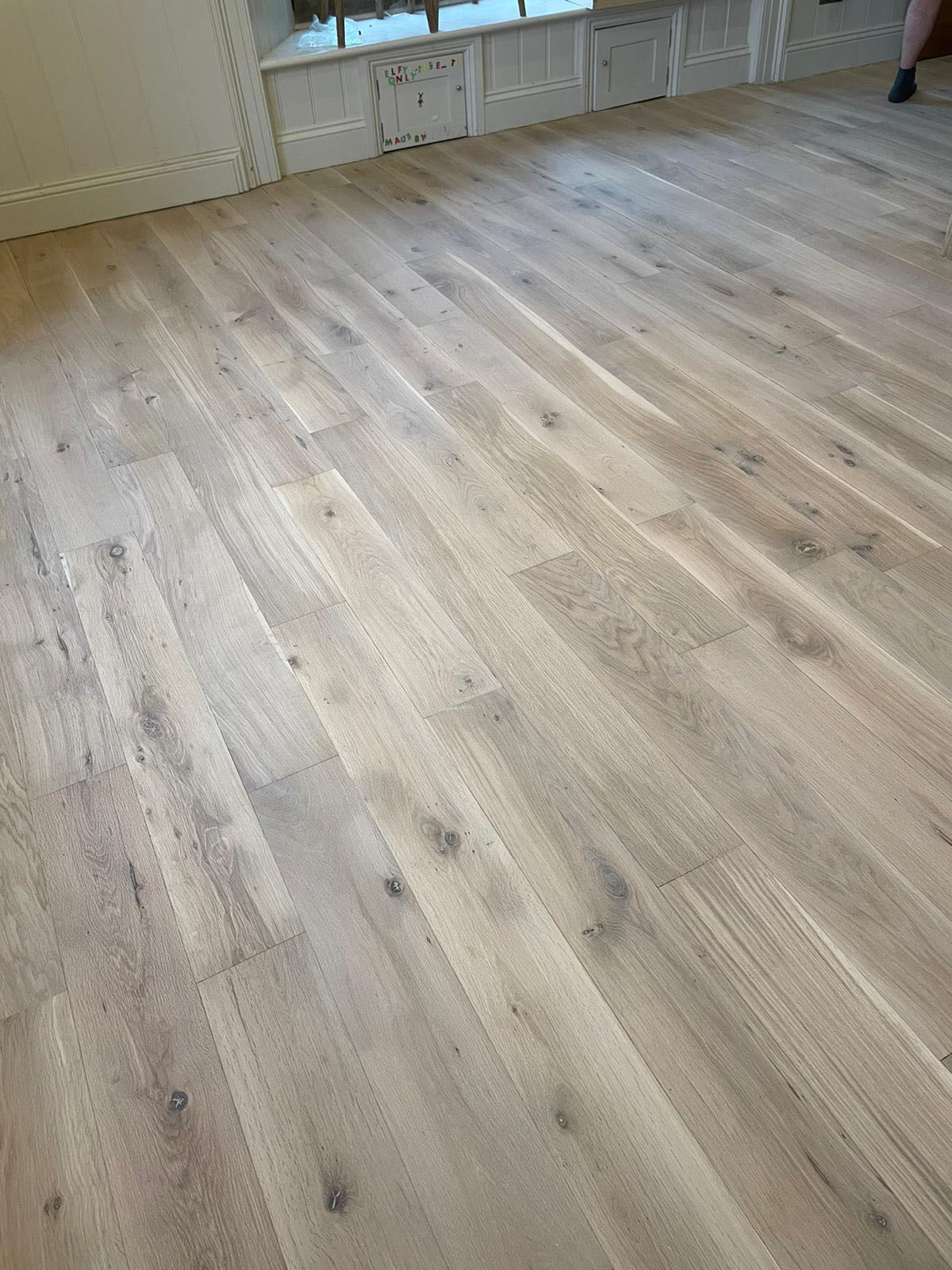
Fully bonding an oak floor to the sub-base offers several advantages over a floating installation. A properly bonded floor provides:
Because the flooring is bonded directly to the base, there is considerably less vertical movement.
The direct bond between the timber and subfloor can provide improved acoustics compared with a floating floor over underlay.
A professional flexible flooring adhesive helps accommodate the small amount of natural movement that occurs within timber flooring.
Fully bonded flooring can produce an exceptionally clean and professional installation, particularly with wide boards, parquet, herringbone and other precision flooring designs.
With the correct preparation, engineered oak can be bonded to a variety of appropriate subfloors.
One of the most important parts of any wood-floor installation is the preparation beneath it.
Even the finest oak flooring will only perform as well as the surface onto which it has been installed.
Before fitting begins, we assess the existing subfloor for moisture, strength, stability, flatness and overall condition.
Depending on the property, preparation may include:
Our aim is to create a clean, dry, sound and sufficiently flat base before the new oak flooring is installed.
Moisture is one of the biggest considerations when installing any timber floor. Wood is a natural material and responds to changes in its surrounding environment. Excessive moisture within the subfloor can lead to expansion, cupping, lifting or other forms of movement after installation.
For this reason, appropriate moisture testing forms an important part of our preparation process.
Where moisture levels dictate, an appropriate surface damp-proof membrane or moisture-control system may be required before the flooring is installed.
We also consider the condition and moisture content of the flooring itself before installation.
We use professional flooring adhesives designed specifically for bonding timber flooring.
Unlike rigid adhesives, modern flexible wood-floor adhesives are designed to maintain a strong bond while accommodating a controlled amount of natural timber movement.
The adhesive is applied to the prepared subfloor using the appropriate notched trowel before the boards are carefully positioned, aligned and bonded into place.
This creates a strong connection between the flooring and the sub-base without relying on an underlay or floating click system.
Many engineered oak floors can be installed over water-based or electric underfloor heating systems, subject to the flooring manufacturer’s requirements and the suitability of the complete floor construction.
A fully bonded engineered floor can be particularly effective with underfloor heating because there is no separate underlay layer between the timber and prepared subfloor.
However, the flooring, adhesive, subfloor preparation products and heating system must all be compatible.
Correct commissioning and gradual temperature changes are also essential to protect the timber from excessive or sudden changes in temperature and moisture.
Solid oak requires additional consideration and is not suitable for every underfloor-heating installation. Where underfloor heating is present, we will advise on the most appropriate flooring construction.
Where an unfinished or renovation-grade oak floor is installed, we can provide a complete sand and finish service after fitting.
This allows the appearance of the floor to be tailored to the property rather than being restricted to a factory-produced colour.
Options can include:
The result is a floor designed to look as though it belongs naturally within the property.
Every property is different, and we believe a quality wooden floor installation should begin with the correct assessment rather than simply laying boards over the existing surface.
From subfloor preparation and moisture control through to bonding, fitting, sanding and finishing, we believe the installation is just as important as the appearance of the finished oak.
Whether you are considering a wide-plank engineered oak floor, traditional solid oak boards or an intricate oak parquet installation, we can provide a complete installation service from preparation through to the final finish.
If you’re considering a new oak floor, we can advise on the most appropriate flooring construction, installation method and finish for your property.
Discover our latest transformations across Gloucestershire, from Victorian pine restoration in Stroud's historic mills to contemporary oak installations in Cheltenham's Regency properties.


Take it from the 200+ customers who have rated us five stars. Every review below is a real review left on our Google profile, where you can read them all unedited.
A fully bonded floor has considerably less vertical movement, so it feels solid underfoot, with reduced hollow sound and greater stability. It also produces an exceptionally clean, professional installation, particularly with wide boards, parquet and herringbone.
Many engineered oak floors can, subject to the manufacturer’s requirements and the suitability of the complete floor construction. The flooring, adhesive, subfloor preparation products and heating system must all be compatible, and the system must be commissioned correctly. Solid oak needs additional consideration and is not suitable for every underfloor-heating installation.
We assess the existing subfloor for moisture, strength, stability, flatness and overall condition. Preparation can include removing old flooring and adhesive residues, moisture testing, a damp-proof or moisture-control system where required, priming, smoothing or levelling compounds and repairs, so that the base is clean, dry, sound and sufficiently flat.
Yes. Where an unfinished or renovation-grade oak floor is installed, we provide a complete sand and finish service after fitting, with options from natural and white-washed finishes through traditional warm tones to dark and smoked effects, in hardwax oil or a professional lacquer system.
